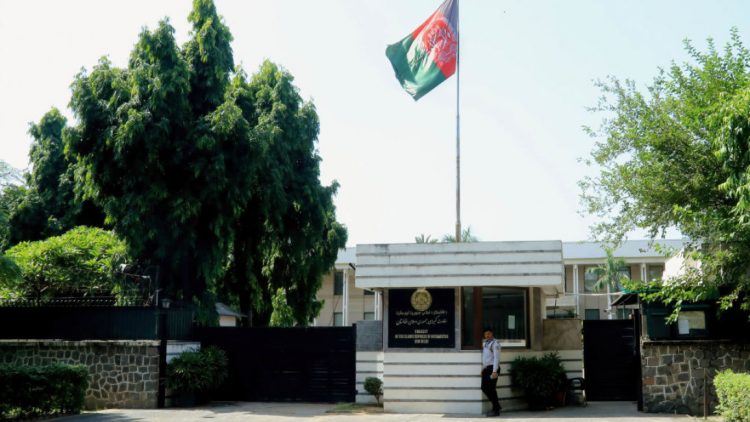
The Supreme Council of National Resistance for the Salvation of Afghanistan expresses deep concern over the action taken by the Government of India, which claims to be the world’s largest democracy, toward normalizing relations with the Taliban group and transferring Afghanistan’s diplomatic representation to this group. The Council considers this step to be contrary to the expectations of the Afghan people, a hasty decision, and one that is inconsistent with the objective realities of Afghanistan.
The fundamental principles of international law and the requirements of the United Nations Charter stipulate that the recognition of governments and the establishment of diplomatic relations with state representatives are conditional upon legal legitimacy, genuine representation of the people, and adherence to international obligations. The Taliban group, due to the absence of official international recognition and its persistent record of blatant violations of human rights in Afghanistan and of international law, has neither met nor currently meets these conditions. Engagement and normalization of relations with the Taliban, an extremist group with a terrorist-oriented approach that does not represent the people of Afghanistan, are therefore unjustifiable, particularly in light of India’s deep and longstanding relations with the Afghan people, and fall far short of expectations.
The Supreme Council of National Resistance believes that engagement with and recognition of the Taliban will result in serious, negative, and irreparable security and social consequences at both regional and international levels. Such actions will undermine the efforts of the international community to achieve lasting peace and a rules-based international order, and will encourage this group to further expand its destructive activities.
We expect the Government of India, as a longstanding friend of the Afghan people, to continue its cooperation with the people of Afghanistan and their genuine representatives, taking into account the historical and cultural ties, shared values, and the objective realities of the country. The Council also calls upon the international community to act responsibly in response to Afghanistan’s tragic situation, to adopt a cautious approach grounded in international law, and to respect the will of the Afghan people.